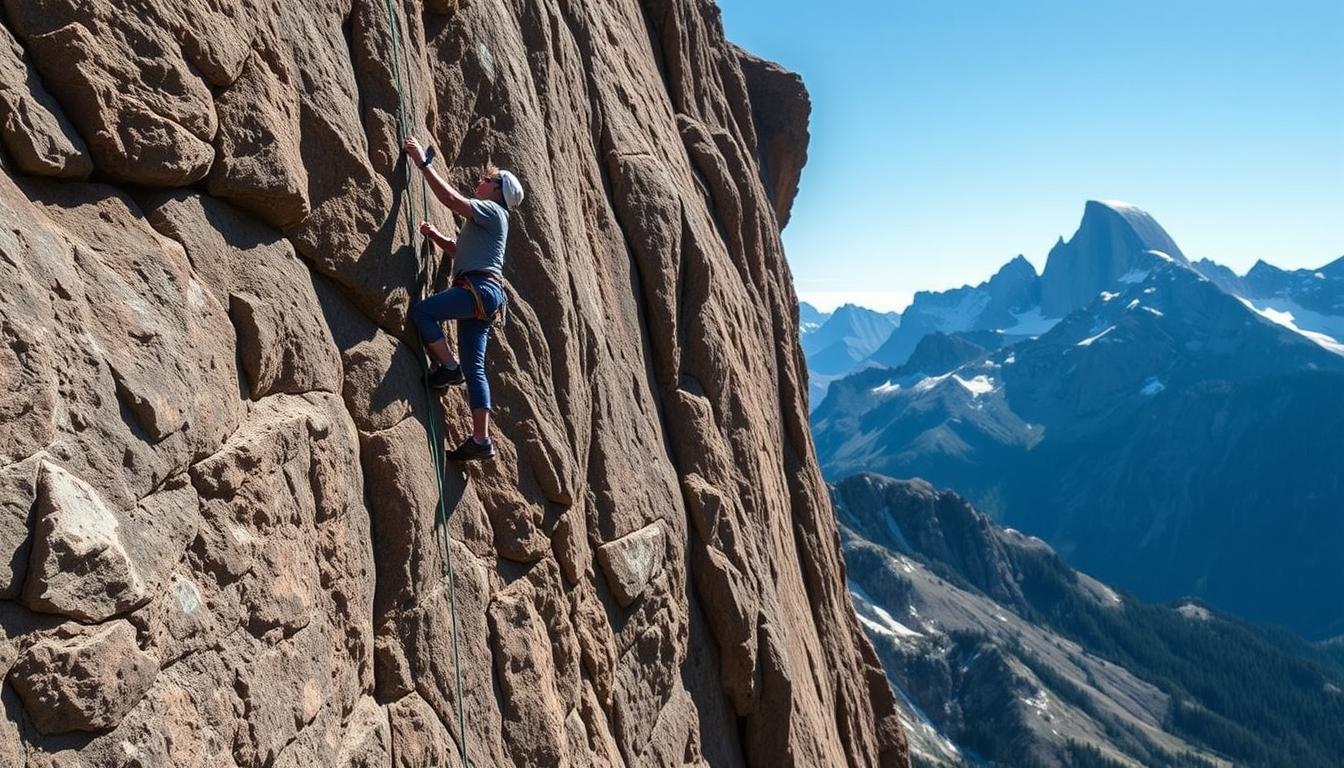
Rock climbing has been thrilling adventurers and fitness lovers for years. It’s not just about the physical challenge or the mental focus. It’s about the excitement of reaching the top of a rock face. Starting out can be both thrilling and scary, but with the right info, you can start with confidence.
In this guide, we’ll cover the basics of rock climbing. We’ll talk about the different types of gear and essential techniques. We’ll also look at the benefits, safety, and tips for beginners. So, let’s explore the world of rock climbing together!
Rock climbing is a challenging activity that tests your physical and mental limits. It needs strength, agility, balance, and problem-solving skills. Whether you’re climbing a huge cliff or an indoor wall, the feeling of success is unmatched.
What is Rock Climbing?
Rock climbing is an exciting outdoor activity. It involves climbing natural rock formations or artificial walls. This sport is loved by many, offering both physical and mental challenges.
It can be done indoors in climbing gyms or outdoors on natural rocks. This makes it a versatile sport.
The history of rock climbing started in the 19th century. Adventurous mountaineers first explored and conquered the world’s peaks. Today, the sport has grown with new rock climbing gear, techniques, and disciplines like bouldering and sport climbing.
“Rock climbing is not just a physical pursuit, but a mental and spiritual one as well. It’s about pushing your limits, finding your inner strength, and connecting with the natural world around you.”
Rock climbing is great for both newbies and seasoned climbers. It’s a thrilling way to challenge yourself and connect with nature. Climbing a tall rock face or mastering a tough route is incredibly rewarding.
Types of Rock Climbing Gear
Rock climbing is an exciting sport that needs special Climbing Gear for safety and success. Rock Climbing Shoes give you the grip you need. Climbing Harnesses keep you safe by securing you to the wall.
Climbing Ropes are vital for catching you if you fall. They provide a safety net. Carabiners, which are lightweight metal rings, connect the rope to your harness and the wall, making it safe to move.
“The right gear can make all the difference in rock climbing. It’s essential to choose equipment that fits properly and is suitable for your skill level.”
Helmets protect your head from impacts and falling debris. As a beginner, investing in quality gear is key. It keeps you safe and comfortable while climbing.
Finding the right Rock Climbing Shoes, Climbing Harnesses, and other gear can be tough. But with some research and advice, you’ll climb with confidence.

Choosing the Right Climbing Gym
If you’re new to rock climbing, finding the right climbing gym is key. With indoor climbing becoming more popular, there are many choices. But, not all gyms are the same. It’s crucial to pick one that’s safe and fun for you.
Look for a climbing gym with routes for all skill levels. Beginners need a place to grow at their own speed. Also, check the equipment quality, how clean the gym is, and if the instructors know their stuff.
“The right climbing gym can make all the difference in your journey as a rock climber. It’s important to find a place that challenges you while also making you feel safe and supported.”
Many climbing gyms offer classes for newbies. These classes teach you how to climb right and use the gear safely. They also help you feel more confident as you climb harder routes.
Starting at an indoor climbing gym is a smart move. It lets you practice and learn in a safe place. With the right gym and guidance, you’ll soon be a skilled rock climber.
Basic Rock Climbing Techniques
If you’re new to rock climbing, learning the basics is key. You’ll need to know how to climb and position your body. We’ll cover the essential techniques for beginners.
Footwork is critical in Rock Climbing. Knowing how to place and move your feet is vital. Techniques like crimping and pinching help you stay balanced and in control.
Body positioning is also crucial. Flagging helps you balance and move through tough spots. Keeping your body aligned and managing your center of gravity is important for both indoor and outdoor climbing.
“Climbing is a game of balance, precision, and creativity. By mastering the fundamental techniques, you’ll unlock a world of possibilities on the rock.”
As you get better at Indoor Climbing, you’ll learn more advanced techniques. But start with the basics. With practice and a desire to learn, your skills will improve quickly.

Safety First: Climbing Best Practices
Rock climbing is an exciting outdoor activity that needs careful attention to safety. As you start climbing, knowing how to use rock climbing gear and following safety rules is key. This ensures your safety and makes climbing more enjoyable.
Using equipment correctly is a big part of rock climbing safety. Harnesses, carabiners, ropes, and helmets are all important for your safety. Make sure you know how to fit and use them right. Ask experienced climbers or your local climbing gym for help.
“Safety is not just a set of rules, it’s a mindset. Embrace it, and your climbing journey will be more rewarding than ever.”
Talking to your climbing partners is also very important. Make sure you have a plan for how to communicate during climbs. This helps keep everyone safe and builds a strong team.
Knowing the climbing grades and ratings is also key. It helps you choose routes that are right for your skill level. Start with routes that challenge you but are still safe. Look at climbing guidebooks or ask experts for advice.
By focusing on safety, you can enjoy the thrill of rock climbing more. Safety is not just rules; it’s a way of thinking that makes climbing better and safer for years.
Outdoor Rock Climbing: Getting Started
Starting your outdoor rock climbing journey is exciting but needs careful planning. It’s key to master skills from indoor rock climbing gyms. Outdoor Outdoor Climbing comes with its own set of challenges.
When you go outside, finding the right Climbing Gear and spots is crucial. Look for places with different rock types, like cliffs and boulders, that match your skill level. Get advice from seasoned climbers or local clubs to pick safe spots.
“Outdoor rock climbing is a thrilling and liberating experience, but it demands respect for the natural environment and unwavering safety protocols.”
Choosing the right Climbing Gear is also vital. You’ll need more than just a harness, carabiners, and ropes. Make sure you have climbing shoes, chalk bags, and a reliable belay device.

Starting your outdoor Outdoor Climbing adventure needs technical skills, fitness, and mental readiness. With the right help and a focus on safety, you’ll enjoy the thrill of natural rock formations and improve your climbing skills.
Rock Climbing for Beginners
Starting your rock climbing journey is exciting and rewarding, especially for newbies. Whether you’re at an indoor gym or outdoors, knowing the basics is key. It ensures a safe and successful start.
For beginner climbers, facing fears is a big step. It’s normal to feel scared of heights or think the sport is too hard. But, with good teaching and a supportive group, you can beat these fears. Start small, build your confidence, and celebrate your wins.
Building physical strength and flexibility is vital for beginners. Regular training helps improve your climbing. Focus on your core, arm, and grip strength, and get to know your body better. Yoga or bodyweight exercises can also boost your climbing skills and fitness.
Setting realistic goals and tracking your progress is important. Whether it’s mastering a route, boosting your endurance, or just enjoying the climb, clear goals keep you motivated. Having a plan helps you stay focused and inspired.
Lastly, connecting with the climbing community is essential. Join a gym, take beginner classes, or find mentors. Being part of a community adds to the fun. You learn from others and share the excitement of this thrilling sport.
Essential Knots for Rock Climbing
Rock climbing is an exciting sport that needs a good grasp of essential knots. Knowing these knots keeps you safe and lets you conquer tougher climbs with ease. We’ll look at three key knots: the figure-eight follow-through, the clove hitch, and the prussik knot.
The figure-eight follow-through is a basic knot for attaching the rope to your harness. It’s strong, easy to check, and loved by rock climbers. It’s vital for climbing techniques and keeping you safe.
“The figure-eight follow-through is the backbone of rock climbing. It’s a knot you can’t afford to get wrong.”
The clove hitch is great for attaching climbing ropes to anchors or fixed points. It’s fast to tie, perfect for setting up rock climbing systems or quick adjustments.
The prussik knot helps rock climbers move up or down a climbing rope. It’s a friction knot that makes a secure, adjustable link. This adds safety to your climbing techniques.

Learning these essential knots is key for becoming a skilled rock climber. By knowing their purpose and how to tie them, you’re ready for any climbing challenge.
Rock Climbing: Nutrition and Hydration
Proper nutrition and hydration are key for rock climbing success. Whether you climb outdoors or at the gym, the right food can boost your performance. It helps you recover faster and climb better.
Before climbing, eat a balanced meal with carbs, proteins, and fats. This gives you energy and helps your muscles work well. *Avoid heavy, greasy foods that can slow you down.*
Stay hydrated during your climb. *Carry a water bottle and drink often to replace lost fluids.* Electrolyte drinks, like sports drinks or coconut water, keep your minerals balanced and prevent cramps.
After climbing, eat something with protein to help your muscles heal. *Try Greek yogurt with fruit, a protein shake, or a lean meat sandwich.* Good nutrition and hydration improve your climbing and help you recover faster. This lets you tackle your next adventure with more energy and strength.
“Proper nutrition and hydration are the foundation of peak climbing performance.”
Progressing in Rock Climbing
Rock climbing is thrilling, and you’ll soon want to try harder routes. To move forward, you need to work on your body, mind, and strategy. This will help you beat plateaus and reach new heights.
Consistent practice and a dedication to improving your Rock Climbing techniques are the keys to unlocking your full potential. Whether you’re aiming to conquer more difficult outdoor climbing routes or enhance your skills at the climbing gym, incorporating targeted training exercises and adopting a growth mindset can help you progress steadily.
“The secret to getting ahead is getting started.” – Mark Twain
Improving your Climbing Techniques is crucial. Focus on footwork, body positioning, and grip strength. Also, visualize success, manage fear, and stay focused and confident on the wall.
Every challenge you conquer is a reason to celebrate. Becoming a skilled Rock Climber is a journey. Each step you take brings you closer to reaching your full potential.
Resources for Rock Climbers
Are you new to rock climbing or looking to improve your skills? There’s a lot of help out there. You can find books, websites, apps, and organizations that will make your climbing better. This guide will show you where to find these resources.
Beginners should check out “The Rock Climber’s Training Manual” by Michael L. Anderson and Mark L. Anderson. Also, “Mountaineering: The Freedom of the Hills” edited by The Mountaineers is great. These books cover gear, techniques, and safety. Websites like Mountain Project and Climbing Gear Guides have info on climbing spots and gear reviews.
When you get better, try apps like Mountain Project and Crimpd. They have routes, training plans, and ways to meet other climbers. Groups like the American Alpine Club and Access Fund also have lots of resources. They offer workshops and help protect climbing spots.