Explore the deep sea, a place full of mysteries. It’s a world of extremes, with high pressures and total darkness. Here, you’ll find creatures that are truly bizarre and events that are hard to believe.
The deep sea is a tough place but it’s alive with different kinds of life. These creatures have adapted to survive in such harsh conditions. Let’s dive into the deep and discover the strange things that live down there.
Fun Facts: Exploring the Bizarre and Captivating
Dive into the mysterious deep sea and find a world full of strange and interesting facts. This world is full of amazing adaptations and secrets that have puzzled humans for a long time. Get ready to be amazed by the deep sea’s bizarre and captivating nature.
Did you know some deep-sea creatures can make their own light? This light helps them find food or signal to others. As you go deeper, you’ll find creatures with glow-in-the-dark eyes to help them move through the dark.
The deep sea is full of weird and wonderful creatures. Picture a fish with a clear head or a creature with a huge mouth. These deep sea fun facts and ocean mysteries show how life can thrive in extreme conditions.
As we keep exploring the bizarre and captivating ocean, we’ll find more surprises. From the deep Mariana Trench to hot springs under the sea, the ocean always amazes us. Get ready to be amazed by the secrets beneath the waves.
The Abyssal Zone: A World of Extremes
Explore the abyssal zone, the ocean’s deepest and most extreme part. It’s a place of crushing pressure and eternal darkness. Here, life faces limits like no other place on Earth. The pressure from the water above can be over 15,000 pounds per square inch, crushing anything human. But, life thrives here, thanks to creatures that glow in the dark.
Bioluminescent Creatures: A Dazzling Display
In the abyssal zone’s dark depths, creatures glow to communicate, hunt, and defend themselves. Their lights range from tiny twinkles to big flashes. This light-making skill is key to their survival in the abyssal zone’s tough conditions.
Crushing Pressures and Eternal Darkness
Going deeper into the abyssal zone means facing more pressure and darkness. The water’s weight presses down with a force that’s hard to imagine, crushing anything from the surface. But, creatures here have evolved to survive. They have special bodies and ways to stay alive in such a harsh place.
Ghostly Residents of the Deep
Step into the ocean’s depths, and you’ll find a world full of ghostly creatures. They seem to break the rules of nature. These deep sea beings have evolved amazing ways to live in the ocean’s tough conditions.
Bizarre Adaptations for Survival
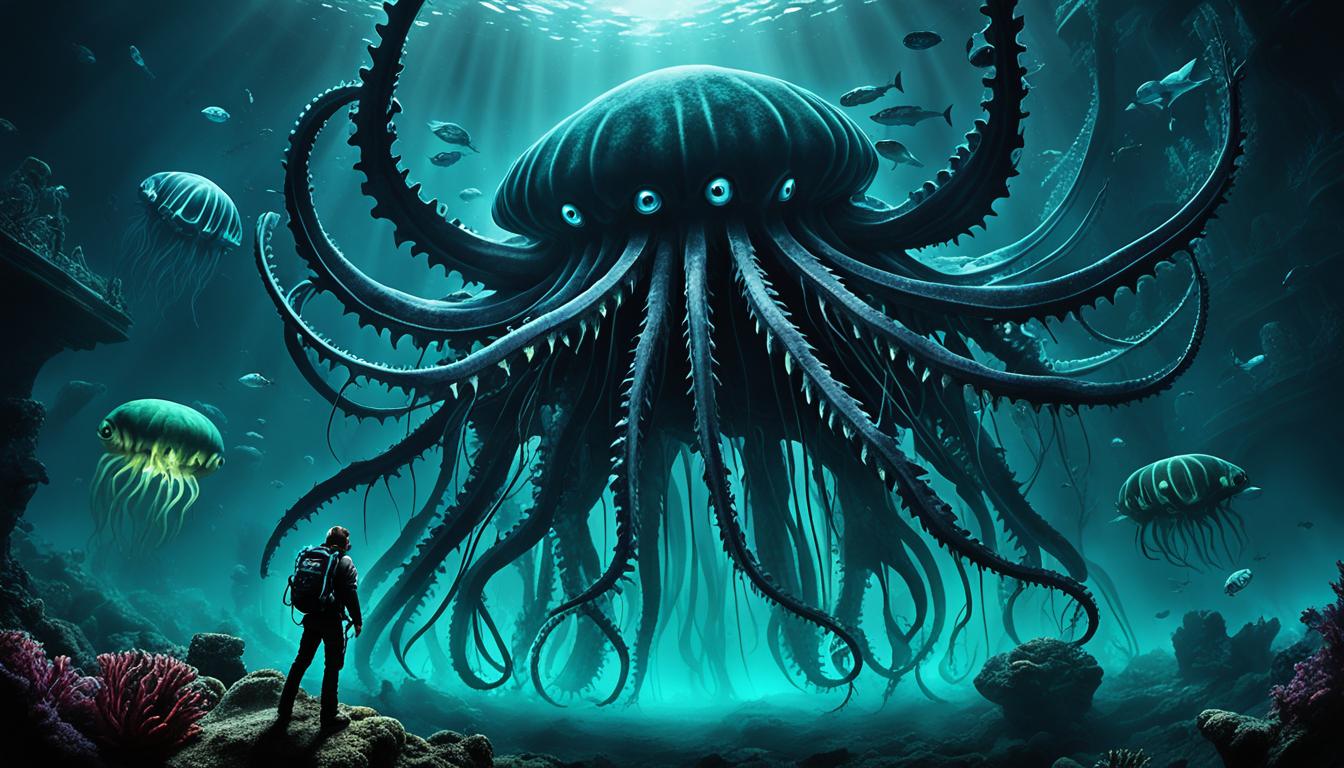
The anglerfish and giant squid are just two examples of nature’s creativity. The anglerfish has a glowing lure to draw in prey. The giant squid is huge and has strong tentacles to catch food and avoid danger.
The vampire squid also has special ways to survive. It can make its own light. This helps it move through the dark, communicate, and defend itself.
These creatures’ adaptations are incredible. They let them live in one of the toughest places on Earth. As we learn more about the deep sea, we’ll likely find even more strange and fascinating creatures.
Hydrothermal Vents: Oases of Life
Deep under the ocean, where sunlight can’t reach, life flourishes. Hydrothermal vents are these underwater oases. They spew out superheated water full of minerals. This creates a home for unique and bizarre creatures.
At the heart of these vents are chemosynthetic communities. These organisms don’t use sunlight for energy. Instead, they live off chemical reactions at the vents. Tubeworms, shrimp, and giant clams are some of these creatures. They turn minerals and gases into energy through chemosynthesis.
This process supports a rich ecosystem in the deep sea. Hydrothermal vents are truly deep sea oases. Scientists are learning more about these vents and their inhabitants.
They’re discovering the amazing adaptations and unique life at these vents. From giant tubeworms to ghostly shrimp, these ecosystems show life’s strength and variety. Even in the most extreme places, life finds a way to thrive.
Deep-Sea Monsters: Fact or Fiction?
The deep ocean has always been a mystery, leading to stories of deep sea monsters. Legends like the kraken and the Loch Ness Monster have fascinated people for ages. But are these stories just made-up, or is there truth hidden in the deep?
Uncovering the Truth Behind Legends
Scientists are still uncovering the secrets of the deep sea. They’ve found evidence that might prove sea monsters exist. Creatures like colossal squid and giant oarfish have been spotted, sparking debate. Some think these are just old tales, but the deep ocean’s mysteries keep us guessing.
Looking closely at the facts and stories, we can tell what’s real and what’s not about deep sea monsters. By learning about the strange creatures that live deep, we might find the truth in old sea legends.
The Mariana Trench: Earth’s Deepest Realm
Deep in the Pacific Ocean, a wonder waits – the Mariana Trench, the deepest spot on Earth. It goes down over 10,900 meters (35,853 feet) to the bottom. This place is called the hadal zone, a place where life is very hard to find.
Exploring the Hadal Zone
The pressure in the Mariana Trench is huge, up to 15,000 pounds per square inch. That’s almost a thousand times what we feel on the surface. Only a few special machines have gone all the way down. They could break apart from the pressure.
But scientists want to learn more about this deep sea. They’re drawn by the secrets it holds. In this dark, high-pressure world, strange creatures live. They light up the darkness and look like nothing from our world.
These creatures show us how life can adapt to extreme conditions. As we learn more about the Mariana Trench, we’re amazed by the mysteries of the deep ocean.

Underwater Mountains and Canyons
Deep in the ocean, a world of hidden mountains and deep sea canyons awaits. These features show the powerful forces that shaped our planet over millions of years. They are often missed but are truly amazing.
Underwater mountains, called seamounts, go up from the ocean floor, some over 20,000 feet high. They come from old volcanoes that are no longer active. These mountains are homes to many marine species that live in the dark.
Deep sea canyons are just as fascinating. They cut deep into the ocean floor, as deep as the Grand Canyon. They were made by tectonic plates moving, erosion, and underwater slides. This shows the strong forces shaping the ocean floor.
Exploring the deep sea has led to new discoveries of these underwater features. They help us learn about unique ecosystems and our planet’s history. These deep sea wonders inspire us to keep exploring the ocean’s secrets.
Shipwrecks and Treasures Lost at Sea
The oceans are full of hidden treasures, with deep sea shipwrecks from centuries past. These sunken vessels tell stories of adventure, mystery, and untold riches. Exploring these lost treasures gives us a peek into our maritime history.
Tales of Sunken Riches
The RMS Titanic is a famous example of a deep sea shipwreck. It sank in 1912 after hitting an iceberg. The wreckage lies almost 12,500 feet deep in the North Atlantic. It shows the strength and weakness of human creations.
Many artifacts and personal items from the Titanic have been found. They tell us about the people who lost their lives.
The Spanish galleon San José, found in 2015, is another amazing story. It sank off Colombia’s coast over 300 years ago. It’s thought to have had gold, silver, and gems worth billions today.
These stories are just a few of the many tales of sunken treasures. As we explore the ocean more, we find more of these lost riches. They give us a look into our maritime past.
The Mysteries of Deep-Sea Currents
The deep ocean is full of deep sea currents that are key to our climate and marine life. These currents move heat, nutrients, and oxygen around the globe. They are made by differences in water density, temperature, and salinity.
Scientists find deep sea currents fascinating as they study ocean circulation. They look at everything from deep currents on the seafloor to mysterious eddies in the dark. These currents affect marine life and the weather.

Learning about deep-sea currents helps us understand our oceans better. By exploring the deep, we learn more about how water moves in the oceans. This helps us see how these currents affect the ocean and climate change.
Deep-Sea Exploration: Past, Present, and Future
The quest to explore the deep sea has been thrilling, filled with new discoveries and tech advances. From early expeditions to today’s high-tech tools, deep sea exploration has grown. It has opened up secrets of the ocean depths to us.
Technological Advancements Unlocking Secrets
The deep sea was a mystery, but new tech has changed that. Submersibles, ROVs, and advanced imaging have let scientists go deeper. They’ve shown us strange creatures and amazing landscapes.
These technologies have given us a lot of new info about the deep sea. We’re learning about the creatures that live there and the complex ecosystems. This knowledge helps us understand our planet and its oceans better.
Preserving the Deep: Conservation Efforts
Exploring the ocean’s depths shows us how vital it is to protect the deep sea. These ecosystems are fragile and not well-known, facing threats like pollution and deep-sea mining. Conservationists, scientists, and policymakers are working hard to save this vast, vital resource.
The deep sea is full of unique creatures, many we haven’t found yet. These creatures have adapted to the ocean’s tough conditions. Their survival depends on a healthy environment. It’s crucial to protect their homes and keep deep-sea activities sustainable.
Conservation efforts are happening worldwide to tackle deep-sea problems. We’re fighting against plastic pollution, promoting safe fishing, and controlling deep-sea mining. By working together, innovating, and caring for the environment, we can keep the deep sea’s wonders safe for the future.