Superstitions have fascinated people for centuries. They create complex webs of belief and tradition across cultures. From simple to bizarre, these superstitions still shape how people think and act today. Let’s take a journey around the world to discover some of the most interesting and strange superstitions.
At their heart, superstitions are beliefs that don’t make sense, yet they offer a way to find meaning and safety in an unpredictable world. These cultural traditions influence our daily lives, guide our choices, and even affect big moments. As we delve into the world of superstitions, we’ll learn about their origins, cultural impact, and lasting importance.
The Origins of Superstitions: A Historical Perspective
Superstitions have fascinated people for centuries. They come from ancient traditions and beliefs worldwide. From ancient Greece’s mystic rituals to Indigenous folklore, they show our quest to understand the unknown.
Many superstitions started when our ancestors tried to grasp the natural world. The fear of the unknown led to superstitious behaviors and beliefs. These ancient traditions became part of our cultures, passed down through generations.
“Superstition is the religion of feeble minds.”
– Edmund Burke
As societies grew, superstitions changed, adding new elements from various cultures. The historical beliefs behind these practices aimed for spiritual guidance and control. They also sought to find order in a complex world.

Today, some superstitions might seem old-fashioned or illogical. Yet, they still captivate many. Learning about the origins of superstitions and their historical beliefs offers insights into human psychology. It shows how ancient traditions influence our views and actions.
Common Superstitions in American Culture
Americans have always been drawn to the mysterious and the unknown. They have a wide range of American superstitions that are part of everyday life. These include avoiding black cats and never walking under ladders. These beliefs deeply influence how people live and move through the world.
The four-leaf clover is a big lucky charm in America. It has been a symbol of good luck for centuries. This tradition comes from ancient Celtic beliefs, where the rare four-leaf clover was seen as magical.
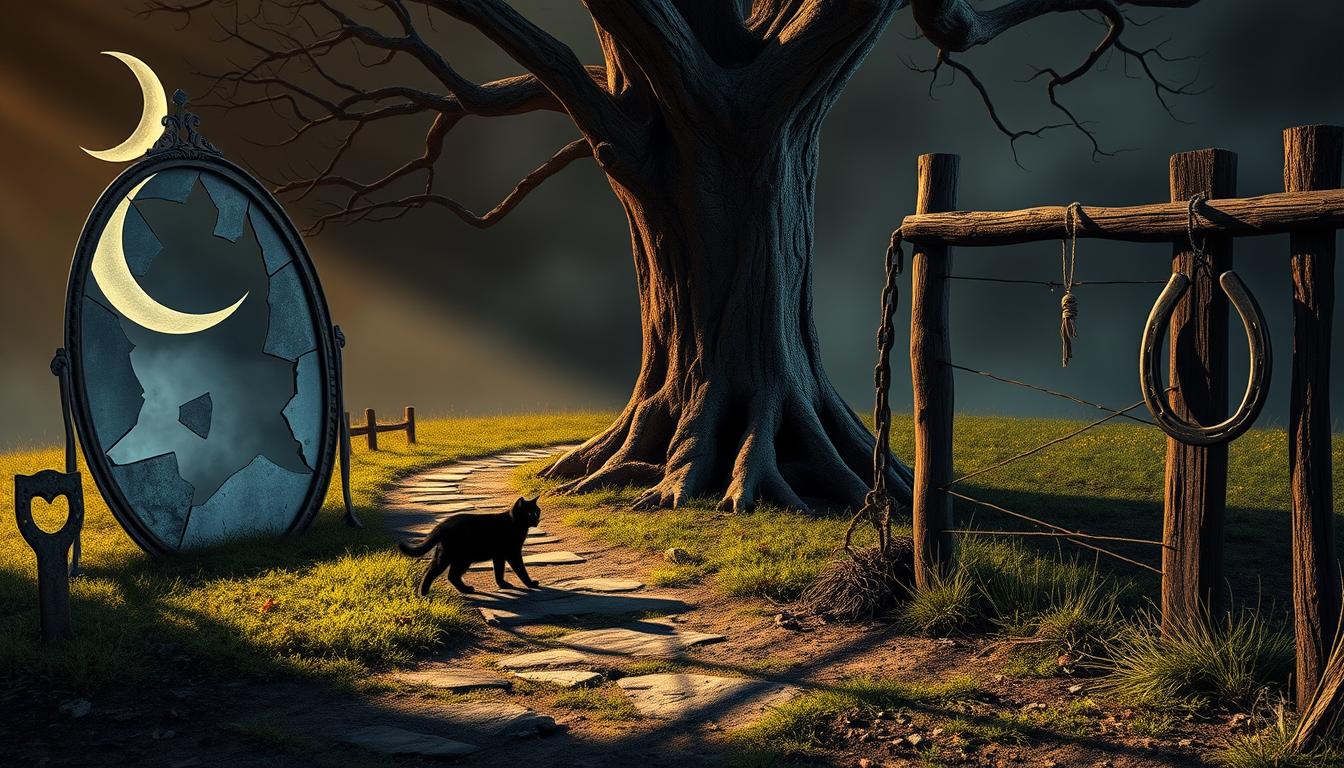
In the USA, omens like shooting stars or bird calls can make people feel uneasy or excited. The idea that breaking a mirror will lead to seven years of bad luck is also common. This superstition comes from ancient Rome, where mirror-making was seen as a serious task.
“Superstitions are the refuge of feeble minds.” – Eleanor Roosevelt
Even though some people doubt them, these American superstitions still have a big impact. They guide people’s choices and actions all over the country. Whether it’s throwing a coin into a fountain or avoiding ladders, these beliefs are a fascinating part of American culture.

Superstitions from Europe That Will Surprise You
The European continent is full of rich cultural traditions. Its diverse folklore is a big part of this. From black cats in Britain to ladybirds in Germany, European superstitions show the region’s unique history and beliefs. Let’s look at some of the unusual beliefs passed down through folklore traditions across the old world.
In Italy, it’s unlucky to open an umbrella indoors. This might come from the belief that umbrellas kept evil spirits away. Also, the number 17 is unlucky in Italy, unlike in many places where 13 is bad luck.
“In Spain, it is believed that keeping a horseshoe above the door will bring good fortune and protect the home from harm.”
Going north to Scandinavia, we find an interesting belief. Seeing a single magpie bird is bad luck, but two together are good luck. This superstition might come from the birds’ past link to witchcraft and the occult.

These are just a few examples of European superstitions that fascinate people worldwide. From the quirky to the deeply rooted, these unusual beliefs give us a peek into the rich tapestry of folklore traditions that have shaped the continent’s cultural landscape.
Unusual Superstitions from Asia
The Eastern world is full of rich traditions, including superstitions. China’s mystical numerology and Japan’s respect for ancestors show the spiritual depth of Asia. These beliefs give us a peek into the region’s spiritual heritage.
In China, the number 4 is bad luck, while 8 is good. This leads people to avoid the fourth floor and seek out 8s in addresses and phone numbers. Feng shui, the ancient art of arranging spaces, also shapes Chinese superstitions. It’s believed that where you place things can change your luck.
“In Japan, the belief in yokai, or supernatural spirits, is deeply ingrained in the cultural fabric. These entities, ranging from mischievous goblins to benevolent guardians, are said to inhabit the natural world, leading to the superstition of avoiding certain locations or engaging in specific rituals to appease them.”
In South Korea, how you sleep can affect your ancestors’ well-being. People arrange their sleep to make sure their feet point in the right direction. This is to honor their ancestors.

These Asian superstitions show the spiritual richness of the East. They are rooted in Eastern beliefs and cultural rituals. By exploring these, we learn more about the world’s diverse views and traditions.
Animal-Related Superstitions
For centuries, people have seen animals as signs of good or bad luck. The black cat and the albatross are just a few examples. Animals have always fascinated and sparked superstitions.
Black cats are often seen as unlucky, especially in medieval Europe. They were linked to witchcraft. Yet, in many places, black cats are thought to bring luck, wealth, and protection.
The albatross is another animal with a special place in folklore. Sailors believe these birds are good luck, signaling a safe journey. But killing an albatross is said to bring bad luck, as in Samuel Taylor Coleridge’s “The Rime of the Ancient Mariner.”
Some animals are considered lucky in different cultures. In China, the lucky frog is a sign of wealth. In the U.S., the lucky ladybug is believed to bring good fortune.
“The appearance of an owl is an omen of bad luck. If an owl hoots three times near your house, someone in your family will soon die.”
Superstitions about animals as omens in nature are widespread. Owls and frogs are just a few examples. People believe their sounds and actions can predict the future, good or bad.
Everyday Objects with Superstitious Significance
In the world of superstitions, everyday objects hold special meaning. From lucky charms to talismans, these items have fascinated people for ages. They span cultures and generations.
The horseshoe is a well-known lucky charm. It’s believed to bring good luck. For centuries, people have hung it over doorways and used it in rituals.
The four-leaf clover is another famous lucky charm. Its rare appearance has captivated many for ages.
The rabbit’s foot is also a popular superstitious object. It was once thought to have magical powers. It was believed to keep evil away.
“Superstitions are the footprints of the human mind, leading us to the hidden corners of our beliefs and the mysteries of our past.”
The mystical crystal ball and the dream catcher are part of the superstitious objects world. This world is full of cultural traditions and personal beliefs. These talismans remind us that the unknown still fascinates us, even in today’s world.
Superstitions Around Major Life Events
Superstitions are big in many cultures for big life events like weddings, births, and deaths. Wedding superstitions are especially common. They range from not seeing the bride’s dress before the wedding to throwing rice for luck. Some traditions even believe in the superstitious meaning of the number of bridesmaids or the bride’s dress color.
Birth omens are also widespread. They believe certain signs or events can predict a baby’s future. For example, in some places, the time and direction a baby is born are seen as omens. Superstitions around death rituals are deeply rooted in culture and religion. They use specific practices and symbols to honor the dead and guide them to the afterlife.
“Superstitions surrounding major life events are not just about luck or misfortune – they often reflect the profound significance these moments hold in the human experience.”
Superstitions around weddings, births, and deaths shape how we celebrate these moments. Knowing the cultural and historical background of these beliefs helps us value the diversity of human traditions. It also shows the lasting impact of superstition in our lives.
Seasonal Superstitions: Celebrating Tradition
As the seasons change, so do our superstitions and beliefs. From holiday superstitions on New Year’s Eve to seasonal beliefs on Halloween, these traditional customs are part of our celebrations.
For example, making a wish at midnight on New Year’s Eve is believed to bring luck and prosperity. Throwing salt over your shoulder is another tradition to ward off bad luck, especially during holidays.
“Superstitions are the shadows of true beliefs.” – Leigh Hunt
Halloween is filled with fascinating holiday superstitions. Black cats crossing your path and the fear of walking under a ladder are common. Carving pumpkins is also a tradition to scare away evil spirits.
By embracing these traditional customs, we honor our cultural heritage and keep the seasons magical. Whether it’s hoping for a new year or enjoying a spooky holiday, these seasonal beliefs inspire and captivate us all.
The Role of Superstitions in Modern Society
In today’s world, you might think superstitions would disappear with science and tech. But, they’re still big in our lives. They show how deep superstitions are in our minds and culture.
Think about athletes doing special rituals before games or people carrying lucky charms. These actions show how much we still believe in superstitions. Psychologists say these beliefs help us feel in control and comforted when things are uncertain. They help us deal with daily worries.
Superstitions also keep our cultural traditions alive. They’re passed down through families and communities. This helps shape who we are and what we believe in the United States.
Even though some superstitions seem irrational, they show our need for meaning and order. As we face the 21st century’s challenges, superstitions offer comfort, tradition, and a unique view of the world. They’re a fascinating part of being human.