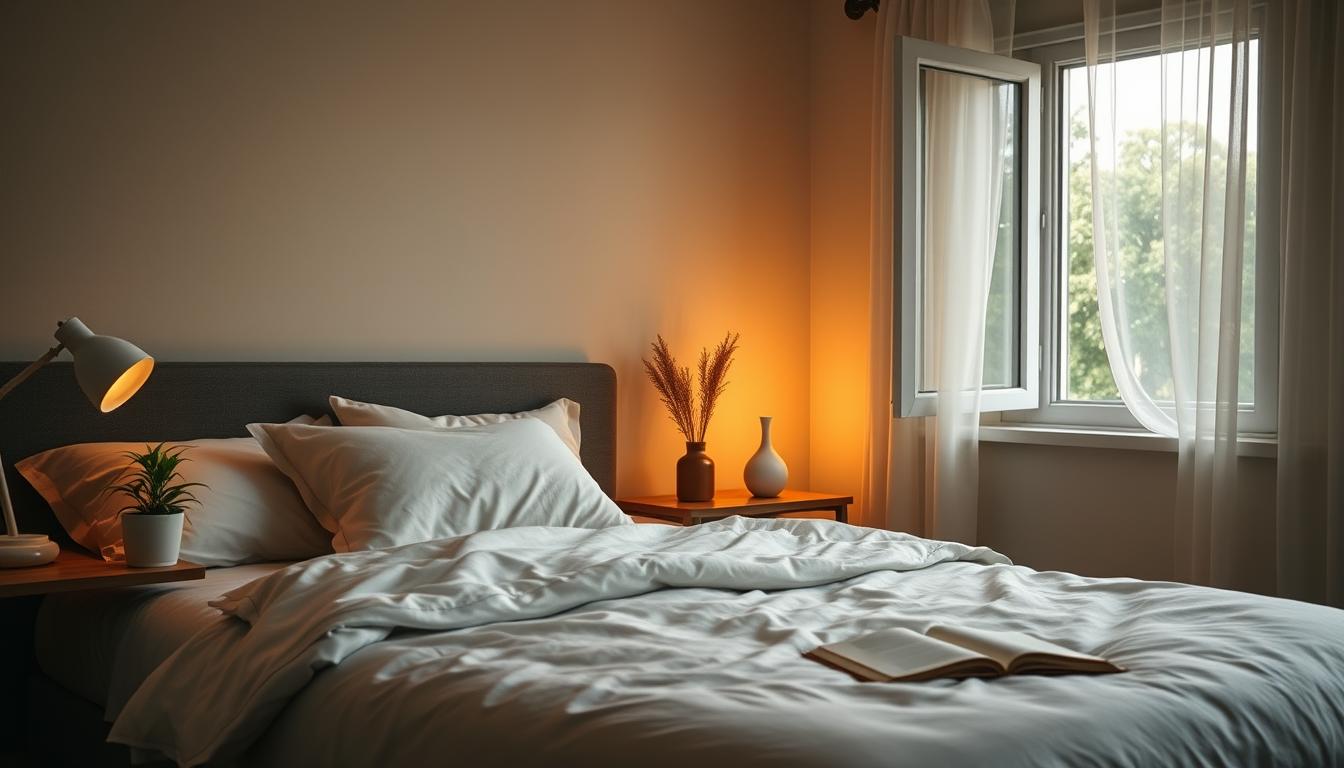
Getting quality sleep is key for our health and happiness. But, many people find it hard to sleep well. Luckily, there are natural ways to boost your sleep and improve your sleep habits. In this article, we’ll share effective tips to help you sleep better and feel refreshed in the morning.
Sleep hygiene is about the habits that help you sleep well every night. By adopting good sleep hygiene habits, you can sleep better and longer. This leads to more energy, better focus, and overall health. We’ll cover tips on creating a sleep-friendly space and adjusting your daily routines to get the sleep your body needs.
Understanding Sleep Hygiene
Good sleep habits and a steady sleep routine are key for a healthy sleep cycle. Sleep hygiene means making your sleep space comfy and your bedtime habits good. It helps you sleep better and feel better during the day.
A good sleep routine can really help you sleep well at night. It’s about having a cozy sleep area, going to bed and waking up at the same time every day. Also, try not to do anything too exciting before bedtime.
“Good sleep hygiene is essential for overall health and well-being. By making a few simple adjustments to your daily routine, you can experience the benefits of quality sleep.”
Practicing sleep hygiene helps your body’s natural sleep cycle. This can make you feel more energetic, smarter, and healthier overall.

Learning about sleep hygiene and using it in your life can greatly improve your sleep. Taking care of your sleep is like taking care of your health. It’s an investment in feeling your best.
Create a Sleep-Friendly Environment
Making your sleep space just right is key for great sleep. The perfect sleep area has a few important parts. Each part helps you sleep well and feel refreshed.
First, temperature matters a lot. The best sleep temperature is between 65°F and 70°F. A room that’s too hot or cold can mess up your sleep. So, keep the room at a comfy temperature all night.

Lighting is also very important for sleep quality. Bright lights, like those from screens, can stop your body from making melatonin. This hormone helps you sleep. Try to have a dim room with soft, warm lights or use blackout curtains to block out light.
Also, noise levels affect how well you sleep. Use a white noise machine or earplugs to block out loud sounds. This helps make a quiet, sleep-friendly environment.
Lastly, your bedding is crucial for sleep optimization. Choose comfy, supportive bedding that fits your sleep style. Good bedding makes your sleep cozy and refreshing.
Establish a Consistent Sleep Schedule
Having a regular sleep routine is key for a healthy sleep cycle. Your body’s internal clock, or circadian rhythm, likes things predictable. Going to bed and waking up at the same time every day helps your body sleep better.
Creating a sleep routine might take some effort, but it’s worth it. A consistent sleep schedule can make you feel more awake and alert during the day. It also helps control your hormones, boosts your immune system, and improves your overall health.
“The key to a good night’s sleep is maintaining a regular sleep schedule, even on weekends.”
To start a consistent sleep routine, try to go to bed and wake up at the same time every day. Don’t let weekends or holidays throw off your rhythm. Instead, keep a regular schedule and have a calming pre-bedtime routine, like a warm bath or reading, to signal it’s time to sleep.

Consistency is crucial for good sleep habits. By sticking to a regular sleep schedule, you can sync your body’s natural rhythms. This leads to better sleep quality and overall health.
Limit Screen Time Before Bed
Getting quality sleep is key for our health. Using electronic devices before bed can hurt sleep hygiene and sleep quality. The blue light from screens can mess with our body’s natural sleep cycle.
To get better sleep, cut down on screen time before bed. Try relaxing activities like reading a book, taking a warm bath, or doing gentle stretches. These can help you relax and sleep better.
“The blue light from screens can trick the brain into thinking it’s daytime, suppressing the release of melatonin, the sleep-inducing hormone.”
Also, use night mode or blue light filters on your devices. This can lessen the negative effects of screens at night. By reducing screen time before bed, you can sleep better.

Creating good sleep hygiene habits is vital for better sleep quality. It helps improve your health and well-being.
Incorporate Relaxation Techniques
Getting a good night’s sleep is more than just a schedule. Adding relaxation techniques to your sleep routine can greatly improve your sleep quality. These methods, like meditation and deep breathing, calm your mind and body. This makes it easier to fall into a deep sleep.
Meditation is a great way to relax before bed. Just a few minutes of focusing on your breath can quiet your mind. Progressive muscle relaxation, tensing and releasing muscles, is also helpful for those with insomnia.
“Incorporating relaxation techniques into your nightly routine can be a game-changer for improving your sleep quality.”
Deep breathing exercises are good for a racing mind. Slowly inhale through your nose, hold, and then exhale through your mouth. This cycle can relax you and help you sleep better.
Try different relaxation methods to see what works for you. Being consistent is important. Make these practices a regular part of your sleep routine for better sleep quality and habits.
Be Mindful of Your Diet
Your diet is key to good sleep hygiene and sleep quality. Some foods and drinks help you sleep better, while others can make it harder. Choosing the right foods can improve your sleep optimization and health.
Drinking caffeine, like in coffee or tea, close to bedtime can keep you awake. It makes your nervous system active. Also, eating a big or spicy meal late can cause stomach problems, making it hard to sleep.
“Maintaining a balanced diet and being mindful of your eating habits can have a profound impact on the quality of your sleep.”
But, eating foods like tart cherry juice, milk, or whole grains can help you sleep better. These foods have melatonin, tryptophan, and magnesium. They help your body’s sleep cycle.
By choosing the right foods and being careful with when you eat, you can greatly improve your sleep hygiene, sleep quality, and sleep optimization. Try different foods and times to see what’s best for you.
Increase Daily Physical Activity
Looking to boost your sleep quality and sleep cycle? Try increasing your daily physical activity. Regular exercise can greatly improve both the length and quality of your sleep.
Experts suggest doing moderate-intensity exercise for at least 30 minutes a day, most days. This could be brisk walking, cycling, swimming, or dancing. The key is to find an exercise routine that you enjoy and can stick to consistently.
“Incorporating physical activity into your daily routine can significantly improve your overall sleep quality and duration, leading to better sleep optimization and a more rejuvenated feeling upon waking.”
When timing your workouts, avoid intense exercise close to bedtime. It can make you feel more alert and harder to fall asleep. Instead, finish your workout several hours before bedtime. This lets your body temperature cool down and your mind relax, helping you sleep better.
Having trouble finding time for exercise? Look for ways to move more in your daily life. Take the stairs, go for a walk during lunch, or use a standing desk. Every bit of movement helps improve your sleep quality and sleep cycle.
Manage Stress Effectively
Good sleep hygiene is more than just a comfy bed or a regular sleep time. It’s also about handling stress and anxiety. These can really mess with your sleep.
Journaling is a great way to deal with stress. Writing down your thoughts and feelings can clear your mind. It helps you sleep better. Also, being good at managing your time can make you feel more in control. This can lead to better sleep habits.
“Mindfulness and meditation have been shown to improve sleep quality by reducing stress and anxiety.”
Mindfulness, like meditation or deep breathing, is also helpful. It calms your mind and body, making you relax and sleep better. Try different ways to see what works for you.
It’s important to tackle the source of your stress to get better sleep. By managing stress well, you can sleep better every night.
Know When to Seek Help
Dealing with ongoing sleep problems might mean you have a sleep disorder. Even if you’ve tried to sleep better and manage stress, it’s time to see a doctor if it doesn’t work. They can help you find the cause and suggest treatments.
Issues like insomnia and sleep apnea can really affect your health. Insomnia makes it hard to sleep and can make you tired and grumpy during the day. Sleep apnea, where you stop breathing while sleeping, can lead to heart problems and strokes.
If you’re always tired, can’t sleep well, or have other sleep worries, talk to your doctor. They can check your sleep, find out why you’re struggling, and suggest treatments. This could be therapy, medicine, or devices like CPAP machines for sleep apnea. Getting help for your sleep can greatly improve your life.