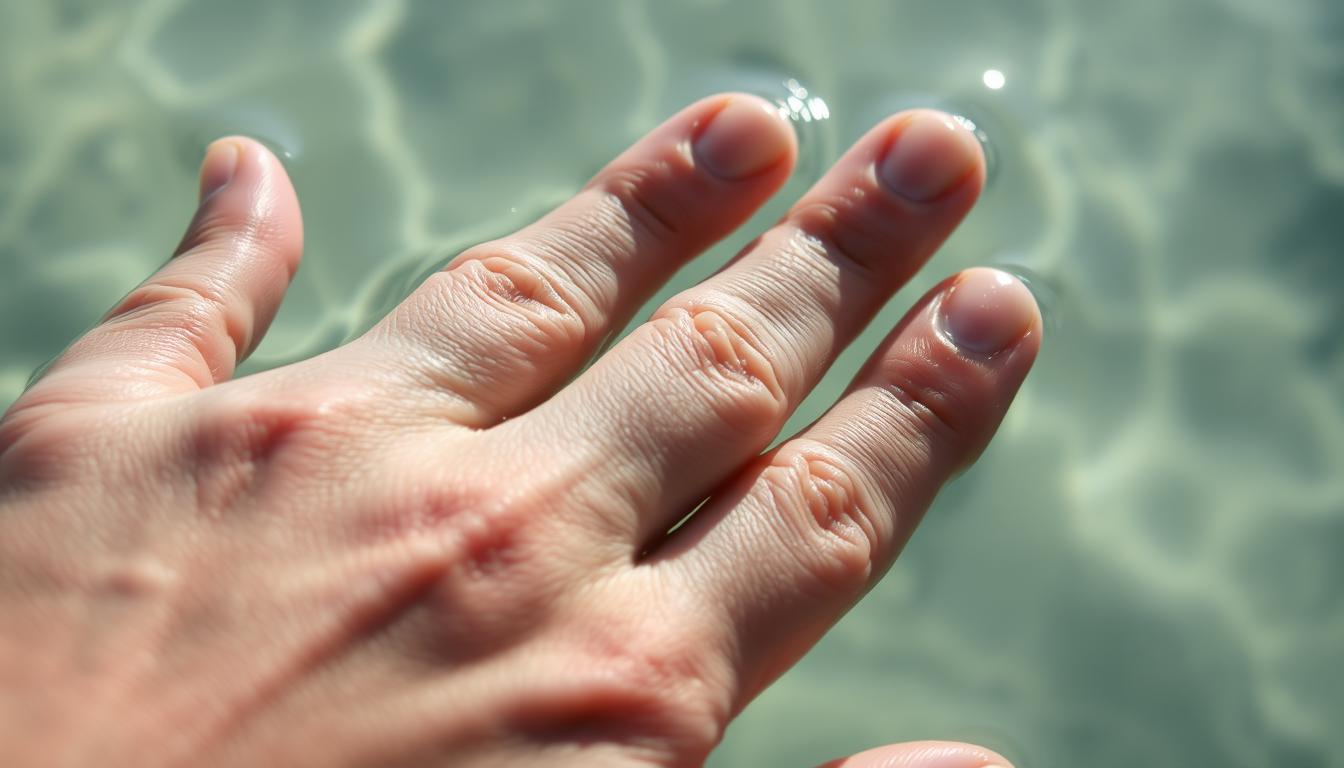
Ever noticed your fingers getting wrinkly after a swim or bath? This happens to many people, even their toes. Let’s explore the science behind this, diving into the world of Everyday Science.
Finger wrinkling is a normal part of our biology. It shows how our bodies react to different environments. This makes it a fascinating topic in science and Everyday Science.
Understanding Finger Wrinkling in Water
When our body meets water, it shows many reactions. One clear sign is the wrinkling of our fingers and toes. But why does this happen? It’s all about how our skin works with water.
The top layer of our skin, the epidermis, is full of dead keratin cells. These cells act as a shield against the outside world. When our skin hits water, these cells soak up the moisture, making the skin swell. The skin on our fingers and toes is thicker, so it takes longer to soak up water. This leads to wrinkles, helping us hold onto things better in water.
This wrinkling isn’t just for looks; it’s also useful. Studies show that wrinkled fingers help us grip better in wet conditions. This is key for those who work with wet hands, like fishermen or swimmers. By understanding how our skin reacts to water, we see the amazing ways our body adapts to its surroundings.
The Science Behind Finger Wrinkling
Research in science has uncovered why fingers wrinkle when wet. It’s a reaction from the autonomic nervous system. When we get wet, our fingers’ blood vessels shrink. This makes the skin wrinkle, helping us grip better.
This idea ties into Everyday Science. It shows how physics and biology explain our world. Finger wrinkling is how our body adapts to wet conditions, improving our grip and dexterity.
Studies also found that toes wrinkle like fingers. This shows our body’s ability to grip and handle objects, even when wet. By studying finger wrinkling, scientists learn more about how our body works and interacts with the world.
The link between finger wrinkling and Everyday Science is clear. It shows how our body adapts to different situations. As scientists keep studying this, they might find more about how we interact with our environment. This could help us understand our daily lives better.
The Evolutionary Perspective
Looking at finger wrinkling in water, we see an evolutionary advantage. Our ancestors’ bodies adapted to many environments. Wrinkled fingers might have helped them grab food from wet plants or streams.
This trait could have given our ancestors a better grip in wet conditions. It shows how our bodies evolved to interact with our surroundings. Just like our toes help us stand on wet ground, wrinkled fingers might have been vital for survival.
Understanding finger wrinkling’s role in evolution shows how our bodies and environments are connected. It might seem like a small thing, but it shows our species’ adaptability. As we learn more about human biology, we’ll find more about our evolution and how we’ve thrived in different places.
Environmental Factors Influencing Wrinkling
When it comes to finger wrinkling, science plays a big role. Everyday Science shows that our skin’s response to water is complex. The water’s temperature can change how elastic and moist our skin is, causing wrinkles.
Scientists once thought water swelling the outer skin layers led to wrinkles. But now, they know it’s more about how our skin reacts to water.
Many environmental factors, like water temperature, affect our skin’s aging. Sunlight’s UV rays can damage elastin and collagen, causing wrinkles. Using sunscreen with SPF 30 or higher is key to protect against UV rays.
Eating lots of fruits and veggies might also help our skin. But, we need more research to know how much nutrition impacts wrinkle prevention.

In Everyday Science, it’s vital to think about how the environment affects our skin. Knowing how these factors cause wrinkles helps us protect our skin. We can use moisturizers with retinol and vitamin C and avoid UV and air pollution.
Exploring finger wrinkling shows us how important science and Everyday Science are. By using this knowledge, we can fight wrinkles and keep our skin looking young.
The Health Implications of Wrinkling
When your body loses more water than it takes in, you become dehydrated. This can make your skin feel less elastic and wrinkle. Your body uses water to keep your skin healthy. Losing too much water can make your skin dry and wrinkled.
Research shows that skin disorders like wrinkles are more common in people with white skin. A study found that 72% of men and 47% of women under 30 had moderate to severe photodamage.
Dehydration can cause wrinkles. This is due to the skin’s structure and how it’s affected by dehydration. Knowing this helps us understand how to prevent or reduce wrinkles.
It’s key to keep a healthy balance of water in our body to prevent wrinkles. Drinking enough water and protecting our skin from the sun can help. This reduces the risk of wrinkles and other skin problems.
Everyday Examples of Finger Wrinkling
Ever stayed in a pool or bathtub so long your fingers wrinkled? This is a clear example of science at work. When our skin is in water for a long time, it wrinkles. It takes about 3.5 minutes in warm water for this to start, and up to 10 minutes in cooler water.
Finger wrinkling is more than just a curiosity. It’s a key part of our daily lives. For example, wrinkled fingers can help us grip wet objects better. This is why swimmers and fishermen often have more wrinkled fingers.

Finger wrinkling is also a subject of study in science. By looking at how our skin reacts to water, scientists learn a lot. They’ve found that wrinkling isn’t just a simple response. It’s actually controlled by our nervous system.
As we dive deeper into Everyday Science, we find many more interesting things. By understanding the science behind everyday experiences, we appreciate the world more. It’s full of complex and fascinating phenomena.
Differences Between Normal and Abnormal Wrinkling
Understanding the difference between normal and abnormal finger wrinkling is key. Normal wrinkling happens when your fingers get wet for a long time. This causes the skin’s outer layer to swell, leading to wrinkles. These wrinkles usually go away once your fingers dry out.
But, abnormal wrinkling might signal a health problem. If your fingers stay wrinkly even when they’re dry, it could mean your body can’t hold onto moisture well. Studies show wrinkles often appear in sun-exposed areas like the face, neck, and hands.
Abnormal wrinkling can sometimes point to serious health issues, like skin conditions or hormonal imbalances. If you’re worried about finger wrinkling, seeing a doctor is a good idea. They can check for any health problems. Knowing the difference helps you take care of your skin better.
Drinking plenty of water and keeping your skin moisturized can help with wrinkles. Eating a diet full of antioxidants and nutrients also supports healthy skin. This can help prevent wrinkles and other skin issues from showing up too soon.
Common Misconceptions About Wrinkled Fingers
Many think wrinkled fingers mean we’re getting older. But science says that’s not true. Finger wrinkling happens when our skin meets water. The keratin layer on our hands and feet is very thick, leading to wrinkles.
A study by Mark Changizi found that people can pick up wet marbles faster with wrinkled fingers. This shows wrinkled fingers might be better in wet conditions. 
Everyday Science helps us understand why fingers wrinkle. It’s not just water getting into the skin. It’s a complex process involving our nerves and skin’s reaction to moisture. By learning about this, we can clear up wrong ideas and see how cool our bodies are.
Old research shows that skin wrinkling isn’t caused by nerve damage in fingers. This shows there’s a brain connection. It’s key to look at how our skin, nerves, and environment work together. By diving into the science, we can really appreciate how amazing our bodies and the world are.
The Role of Genetics in Skin Aging
Genetics have a big role in how our skin ages. Some genetic diseases can make our skin wrinkle, lose its elasticity, and not close properly. For example, wrinkly skin syndrome is a genetic disease that makes skin wrinkle and lose its stretchiness.
This condition shows how genetics affect our skin, making it harder for our skin to handle water and other things outside.
Studies have found 56 types of skin aging, linked to 2349 genetic changes and 366 genes. These genes can make some people more likely to get wrinkles and other signs of aging. The link between genetics and aging skin is complex, with many factors involved, including water and how it affects our skin’s firmness.
Knowing how genetics affect skin aging can help us protect our skin and look younger. By understanding the role of genetics, we can make better choices about our lifestyle and skincare. This includes how to take care of our skin when it’s exposed to water and other stressors.
This knowledge can also help in creating better treatments and products for aging skin. These can be made to fit each person’s unique genetic makeup and body type.
How to Minimize Excessive Wrinkling
According to science, finger wrinkling can be temporary and easily reversible. If you experience excessive wrinkling, there are several ways to minimize it. Everyday Science suggests that maintaining a healthy lifestyle is key. This includes a balanced diet and regular exercise.
Drinking plenty of water can also help. It keeps your skin hydrated and plump, reducing wrinkles. A healthy diet rich in fruits and vegetables is also beneficial. A 2019 Dutch study found that women who ate more fruits had fewer facial wrinkles.
Using sunscreen with an SPF of 30 to 50 daily is another good practice. It protects your skin from the sun’s harmful rays and reduces aging signs.
Avoiding smoking and limiting alcohol consumption are also important. Smoking can speed up skin aging by reducing blood supply. Alcohol can dehydrate the skin, increasing wrinkle formation. By following these tips and maintaining a healthy lifestyle, you can minimize wrinkles and keep your skin looking smooth and youthful.
It’s also important to note that some treatments, like radiofrequency and facelifts, can provide lasting effects. But, they may need repeat treatments or surgeries to maintain results. By understanding the science behind finger wrinkling and taking steps to minimize it, you can help to keep your skin looking its best and reduce wrinkles.
Exploring Other Skin Reactions
Looking at finger wrinkling and other skin issues, we must see the body as a whole. Skin reactions like allergic contact dermatitis can happen from chemicals in creams and cosmetics. It’s key to watch what we put on our skin, mainly with water-based products.
Studies show common allergens like Balsam of Peru and farnesol are in many personal care items. Farnesol can sneak into the CD1a molecule, upsetting natural lipids and causing an immune response. This shows how chemicals and skin cells interact, affecting our skin health.

Conditions like psoriasis and acne can also be affected by stress and the environment. Our skin has a system that deals with stress hormones, impacting our skin and immune system. Knowing these connections helps us take better care of our body and choose the right products, even in water-based settings.
Finger Wrinkling in Popular Culture
Finger wrinkling has caught the public’s eye, appearing in movies and TV shows. It’s used to show a character’s feelings or their surroundings. This natural process has become a visual clue in many stories.
In “Stranger Things,” Eleven’s fingers wrinkle after being in a sensory deprivation tank. This shows the link between water and skin puckering. In “Quantum of Solace,” James Bond’s wrinkled fingers show his experience after coming out of a tub.
Finger wrinkling has also been in science magazines like National Geographic and Scientific American. These publications explore the science behind this Everyday Science phenomenon. They help us understand and talk more about this interesting body response.
As we learn more about finger wrinkling, it shows our ongoing interest in the science of our bodies and the world around us.